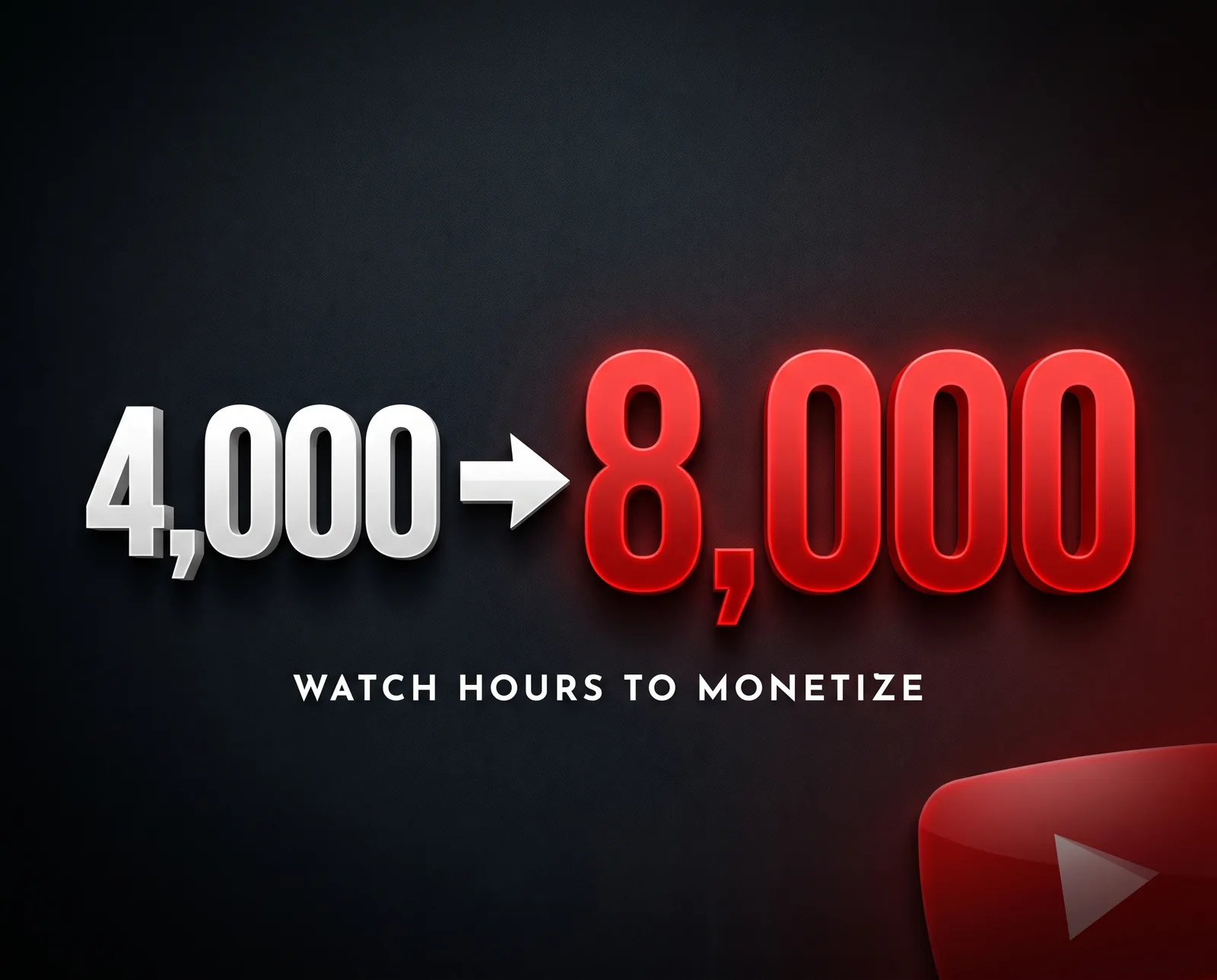
On August 10, 2026, YouTube announced the biggest change to its Partner Program since 2018 — and it’s not the kind creators were hoping for. Starting February 1, 2027, new channels will need double the watch hours or Shorts views to start earning ad revenue.
For the artists and small creators we work with every day, this is a gut punch. The 4,000-hour threshold was already a mountain that took many channels years to climb. YouTube just moved the summit twice as high.
What’s Actually Changing
Here’s the old bar versus the new one for joining the YouTube Partner Program (YPP) and earning ad and Premium revenue:
| Requirement | Until Jan 31, 2027 | From Feb 1, 2027 |
|---|---|---|
| Subscribers | 1,000 | 1,000 (unchanged) |
| Long-form watch hours (past 365 days) | 4,000 | 8,000 |
| OR Shorts views (past 90 days) | 10 million | 20 million |
That’s not a tweak — it’s a doubling of both paths into monetization.
There’s a second change buried in the announcement that Shorts creators should read twice: earning from the Shorts revenue pool now requires maintaining 10 million qualified Shorts views over a rolling 90-day window. Drop below it, and your Shorts revenue pauses until you claw your way back over the line. You stay in the program and keep earning on long-form videos, but for creators whose channels live and die by Shorts, monetization just became something you can lose quarter to quarter — not something you earn once.
Existing partners are grandfathered in and won’t be removed, though they’ll need to accept updated terms in YouTube Studio by January 31, 2027, and meet new minimum-activity conditions to stay active in the program. The lower fan-funding tier — 500 subscribers for memberships, Super Thanks, and Super Chat — is unchanged. That tier survived; the actual ad-revenue tier is what got walled off.
YouTube’s Reasoning — and the Real Reason
Officially, YouTube points to scale: the platform now sees over 200 billion Shorts views daily and more than a billion hours of daily watch time on TV screens alone. In its announcement, YouTube frames the change as “meaningfully rewarding active creators.”
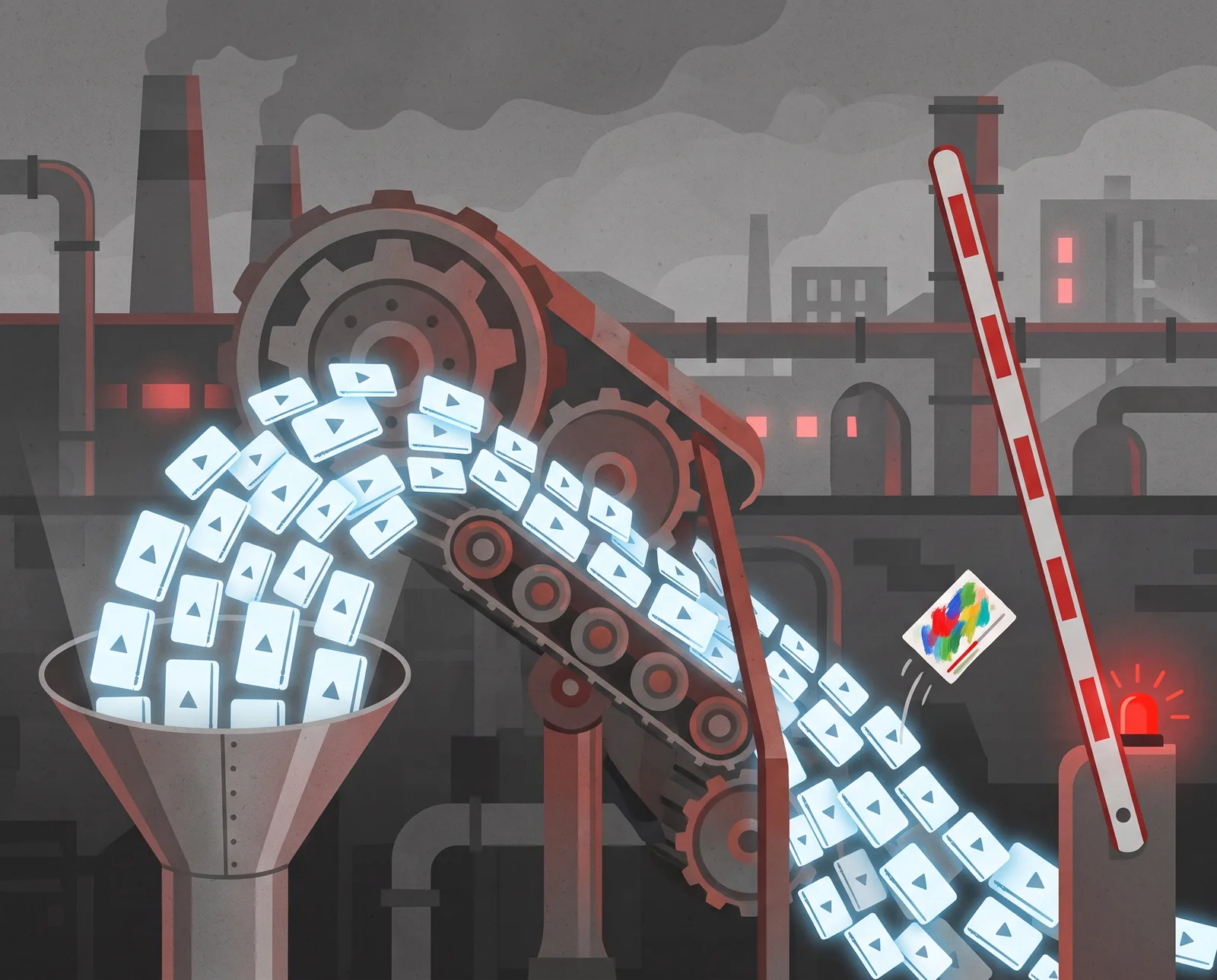
Reading between the lines, this looks like a response to the flood of low-effort, mass-produced AI content competing for the same ad pool. The problem is that raising the threshold doesn’t actually solve that. AI content farms can publish dozens of videos a day and brute-force their way to any view count. A songwriter uploading one carefully made music video a week cannot. As one commenter put it under Dan the creator’s breakdown of the update:
“By raising the thresholds, you’re not just trying to avoid AI slop getting monetized — you’re also affecting small creators, and this is unfair.”
If anything, the new bar filters out exactly the wrong people: the slow-growing, human, niche creators who make YouTube worth watching — while barely slowing down the volume publishers the change is supposedly aimed at.
Creators Are Not Taking It Quietly
Within hours of the announcement, creator YouTube erupted. Drew Daniels didn’t mince words:
The comments under these videos tell the real story. A creator with an active channel wrote: “It took me 2 years to reach 4k watch hours. Doubling that requirement to 8k is a huge blow to young channels.” Another: “Reaching 4k watch hours took me 6 years and now they’ve doubled it.” And from a musician building an original comedy music channel: “I was already working toward 4,000 hours — moving the goal to 8,000 would make that feel impossible.”
The most sobering comments come from creators who were just getting started. One, three months and 22 subscribers into their channel: “I feel like just forgetting the whole thing.” That’s the real cost of this change — not the views or the hours, but the people who look at the new bar and never press record.
Dan the creator’s video is worth watching in full — especially his point about making your voice heard through YouTube’s own feedback channels:
There’s one more uncomfortable detail. YouTube has run ads on non-monetized channels since 2020 — videos from creators who haven’t reached the threshold can carry ads, with the creator receiving nothing. Raising the bar for entry doesn’t just delay when a small creator starts earning; it widens the pool of content YouTube monetizes without sharing a cent.
What You Can Do Right Now
If you’re working toward monetization, the clock matters more than ever:
- Apply before February 1, 2027 if you qualify under the old rules. The 4,000-hour / 10-million-view bar stands until January 31, 2027, and existing partners are grandfathered. If you’re close, this is the time to push — consistent uploads, longer watch-time formats, and promotion that drives real, engaged views.
- Send YouTube feedback. In YouTube Studio, use the Send Feedback tool and say — politely and specifically — that the doubled thresholds hurt small creators. Creator backlash has moved YouTube before: dislike counts, COPPA enforcement details, and Shorts monetization itself all shifted after sustained community pressure.
- Don’t build on one platform. Your channel should feed an audience you own — an email list, a website, a fanbase across TikTok and Instagram — so no single policy change can zero out your income.
Our Take: Reverse This, and Go Further
We’ll say it plainly: this decision should be reversed.
In 2023, YouTube moved in exactly the opposite direction — it lowered the fan-funding bar to 500 subscribers because it understood that giving small creators an earlier taste of earning keeps them creating. That was the right instinct. This change abandons it.
YouTube became the biggest video platform on Earth on the backs of small creators uploading into the void, hoping the work would someday pay off. The platform’s own history shows that betting on small creators is what built it. If the concern is AI-generated spam, fight the spam — with detection, with enforcement, with human-verification — not with a wall that punishes every bedroom producer, vlogger, and independent artist trying to earn their first dollar.
Our hope is that YouTube listens to the wave of feedback pouring in right now, reverses the doubled thresholds before February 2027, and instead does what it did in 2023: make monetization more accessible for smaller creators, not less. Lower the bar for real, human creators. Reward the people who make YouTube worth watching. The 22-subscriber creator wondering whether to quit today might be the platform’s biggest star in five years — but only if they keep uploading.
Sources: YouTube’s official announcement, TechCrunch, Engadget, Music Business Worldwide, vidIQ.