That “electric massage comb” straightening frizzy hair into a glass-smooth sheet in three brush strokes? It isn’t real. Here’s how to spot the fake.
You’ve probably seen it. Scroll through Instagram or Facebook and a sleek little comb glides through a tangled, frizzy mane and — in a few strokes — the hair falls into a smooth, salon-perfect curtain. No heat. No flat iron. No products. And a price that feels almost too reasonable.
If your gut said “that can’t be real,” your gut is right. These ads run almost entirely to women, and the results they show are physically impossible.
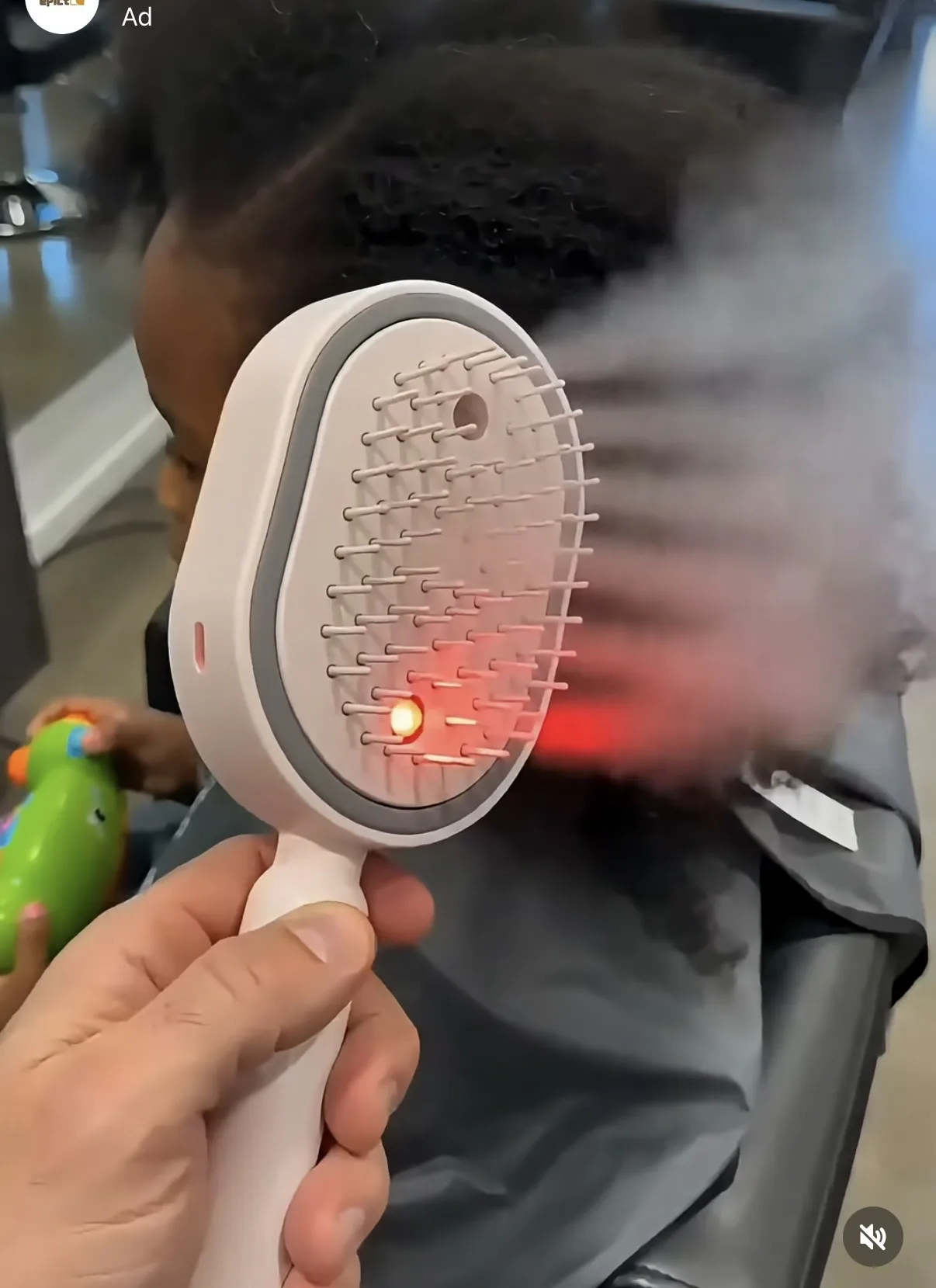
So is the electric massage comb a scam, or does it actually work?
It helps to split this into the two questions buyers are really asking, because they have different answers.
Will they take your money and ship nothing? Usually no. Most of these sellers do ship a product. So it isn’t a “steal your card and vanish” situation.
Will the product do what the ad shows? No. And this is where the deception lives. What arrives weeks later is a cheap vibrating comb — the kind that costs a couple of dollars on AliExpress. It will not straighten curly hair, melt away frizz, or do anything close to what’s in the video. Because that video never happened. It was generated by AI.
So the honest answer to “scam or real?” is this: the product is real, but the ad is fake — and buyers are paying a premium price based on a result that doesn’t physically exist.
Why the ad is physically impossible
Straightening textured hair takes one of two things: heat (a flat iron or hot comb) that temporarily breaks the hydrogen bonds in the hair, or chemistry (a relaxer or keratin treatment) that does it more permanently. A comb that simply vibrates or “massages” the scalp does neither. There’s no way gentle brushing reshapes the bonds that make hair curl.
So when the ad shows hair morphing from coiled to pin-straight in a single stroke, that isn’t fast straightening. It’s a video that was never filmed in the real world.
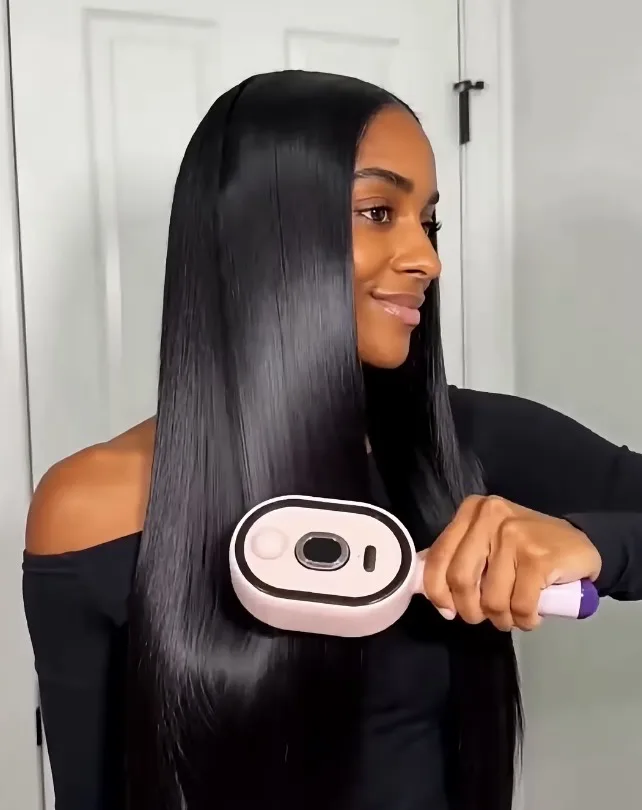
Watch one of the ads
Here’s one of the ads currently running. Play it once, then watch it again slowly and focus on the moment the hair “straightens” — the soft warp around the comb teeth and fingers, and that puff of “steam.” A comb that vibrates produces no steam. None of it is filmed. It’s all generated.
Now watch a real person use it
This is the part the ads don’t want anyone to see. Here’s a genuine, unedited video from an actual TikTok user — not the seller — trying the comb on her own hair:
@jesuslover1963 Using my new product from TikTok
♬ original sound - Blessed to inspire
Notice the difference:
- In the AI ad, hair goes pin-straight in 6 to 10 strokes.
- In real life, she combs the same section over and over for almost six full minutes — and her hair is barely any straighter at the end. A little less frizz, maybe. Nothing remotely like the glassy sheet in the ad.
Six seconds of fantasy versus six minutes of reality. That gap is the scam. The product technically “does something.” It just doesn’t do the thing buyers are paying for.
When the AI gets lazy: ads that don’t even make sense
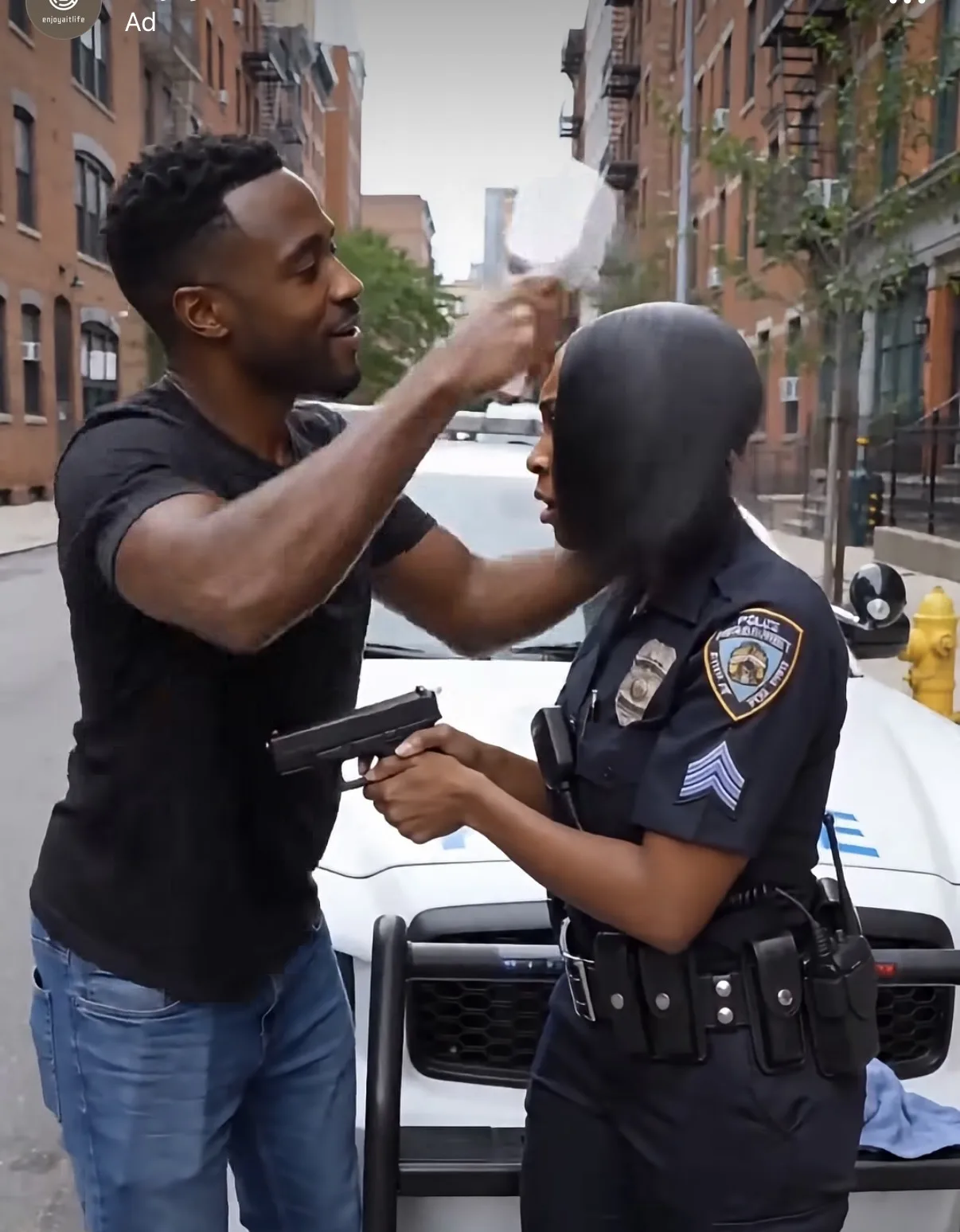
Here’s the tell that should settle it. These campaigns pump out dozens of AI clips a week to dodge takedowns, so quality control falls apart fast. The same “miracle comb” turns up in scenes that are pure AI nonsense — like this one, where a man waves a hairpiece while pointing a gun at a police officer:
Or melodramatic skits with a costumed “maid,” fake billowing steam, and a wide-eyed shocked relative — staged purely to manufacture an emotional reaction and a “Shop Now” tap:
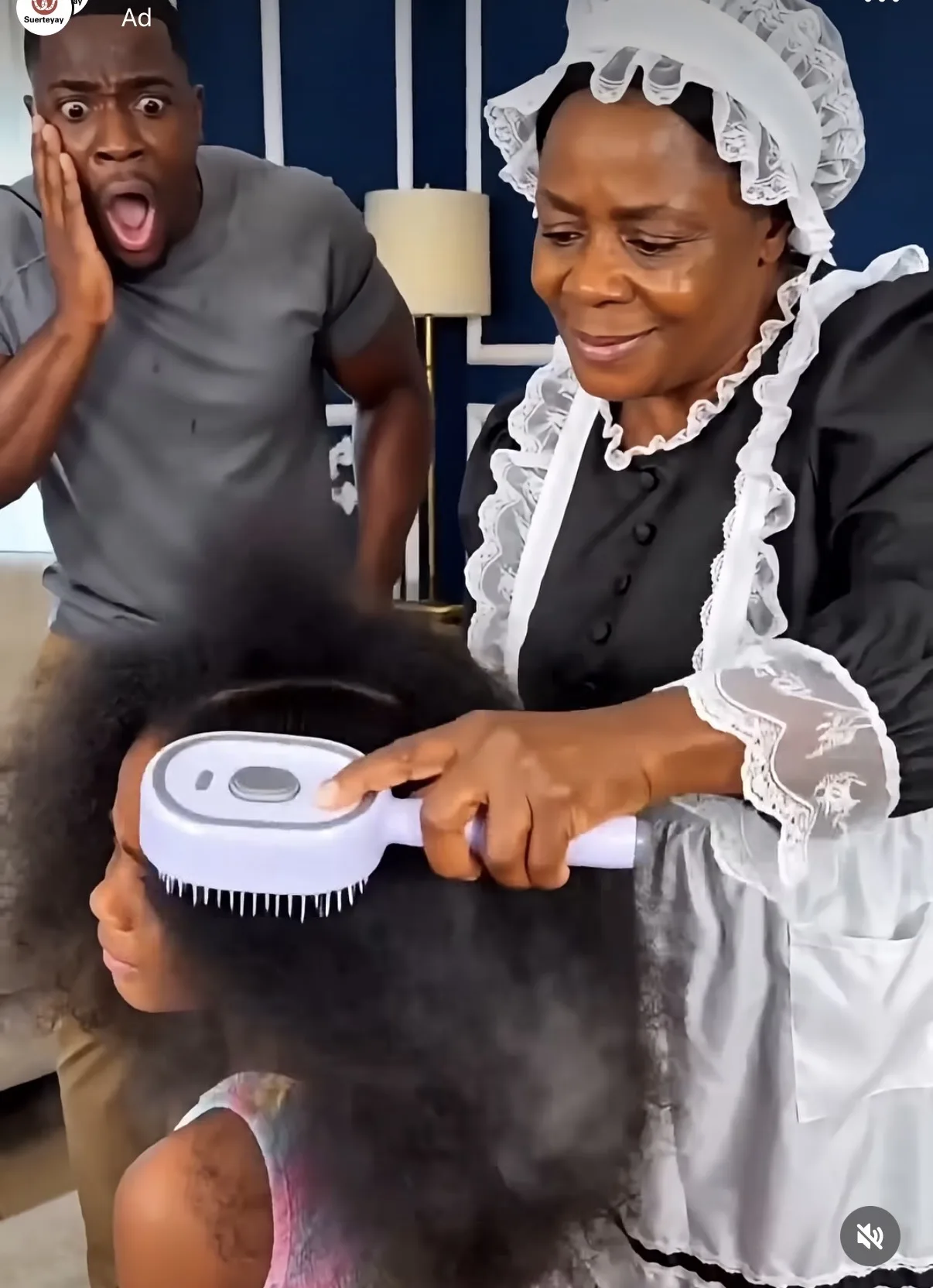
No real hair-care brand advertises like this. This is a churn-and-burn dropshipping operation, not a product.
How to spot an AI-generated ad in 60 seconds
This skill is worth more than any single warning, because the comb is just one of hundreds of these campaigns. Before buying anything found through a social media ad, check for these:
- Impossible before/after in one motion. Real results take time and tools. Glass-smooth hair in a single stroke is fake.
- The “morph” moment. Watch frame by frame — AI video usually has a soft melt or warp right where the transformation happens.
- Warping hands, fingers, and comb teeth. AI still struggles with hands gripping objects.
- Fake steam or glowing lights on a device that has no business producing them.
- Garbled text. Zoom in on the packaging or buttons — AI loves to spit out nonsense letters.
- Scenes that make no sense (see the gun clip above) — a dead giveaway the seller is mass-generating clips with zero oversight.
- A brand-new seller account with no history and a generic name.
- Comments disabled, limited, or full of identical bot praise. Real product pages are messy.
- A bare dropshipping checkout page with a fake countdown timer (“Sale ends in 9:58!”).
- Reverse-image-search the product photo — the same comb usually turns up on AliExpress for a few dollars under ten different brand names.
What actually happens if you order one
It’s the same AliExpress dropshipping formula covered in our Instagram brand ambassador scams breakdown:
- You pay a “today only” price for what’s sold as a specialty device.
- Shipping takes weeks, because it’s coming from a warehouse overseas.
- You receive a generic vibrating comb — the same one listed on AliExpress for a few dollars under a dozen names.
- It does nothing the video promised.
- “Free returns” only exist in theory — buyers are asked to ship it back overseas at their own cost, which exceeds the refund, so most people give up.
It isn’t grand theft. It’s a thousand small, deniable disappointments. That’s exactly why it keeps working.
How to protect yourself (and fight back)
- Don’t buy from the ad. If a product is genuinely good, there will be real reviews and demos outside the paid ad.
- Search “[product name] + scam / review / reddit” before buying.
- Pay with a credit card or PayPal — never a debit card or bank transfer — for chargeback protection.
- Report the ad. Tap the ⋯ menu → Report ad → “Scam or fraud” or “False information.” It takes ten seconds, and it’s the only signal these platforms act on at scale.
- Dispute the charge if you already bought one — “item not as described” is a valid reason.
The bigger problem: Meta shouldn’t allow this
Here’s where the comb stops being the story and becomes a symptom.
Right now, Facebook and Instagram are saturated with AI-generated video ads selling products that can’t do what the footage shows — combs that straighten hair, creams that erase wrinkles overnight, gadgets that defy physics. These aren’t edge cases slipping past the filters. They run as paid ads, which means Meta took the money and pushed them into millions of feeds — disproportionately women’s feeds.
Advertising has banned false demonstrations for decades. You can’t film a car driving on water and call it a feature. But AI has made fake “demonstrations” cheap, fast, and endless, and platform policy hasn’t caught up.
A reasonable standard would be simple:
- AI-generated video used to show a product’s real-world performance should be banned in ads — or at minimum, clearly labeled as a synthetic depiction, not a real result.
- Demonstrations must reflect actual product performance — the same rule that already governs TV advertising.
- Sellers running fake demos should lose their accounts, not just have one ad pulled that they repost an hour later under a new page.
Meta has the detection tools and the policy machinery. What’s missing is the willingness to give up the ad revenue. Until that changes, it’s on consumers to spot the fakes.
Full disclosure: we’re a small business marketing agency that runs Facebook and Instagram ad campaigns for a living. Done honestly — real products, real footage, real results — this stuff works without faking a single frame. That’s exactly why platforms tolerating fake demos poisons the well for every legitimate advertiser.
FAQ
Is the electric massage comb a scam? The product is real but wildly over-promised. The ads use AI-generated video to show hair-straightening results the comb can’t actually produce. Buyers overpay for a cheap item based on fake footage.
Does the electric massage comb straighten hair? No. Straightening textured hair needs heat or chemical treatment. A vibrating “massage” comb does neither, and real-user demos show barely any change even after several minutes of combing.
Are the Instagram and Facebook videos real? No. They’re AI-generated. The transformation is computer-made, not filmed.
Can I get my money back? Possibly. If you paid by credit card or PayPal you can dispute the charge as “item not as described.” Returning it overseas usually costs more than the refund.
How do I report the ad? Tap the ⋯ on the ad and choose Report ad → Scam or fraud / False information.
Seen one of these AI ads in the wild? Spotted a tell worth adding? The more examples consumers collect, the easier they get to recognize.